







Casino Design: The Interesting History
From Monte Carlo to Macau
Casino architecture is far more than a backdrop for gambling; it’s a stage for emotion, psychology, and human theatre. Casino design has always reflected cultural ideals of luxury, risk, and modernity, from the marble salons of Monte Carlo to the mirrored mega structures of Macau.
Each era tells a story through its buildings: from Belle Époque elegance to neon excess, from architectural fantasy to technological spectacle. Today’s casinos are multi-sensory ecosystems where art, engineering, and psychology meet to create spaces as memorable as the games within them.

Casino Design: MONTE CARLO & LAS VEGAS
Casino Architecture and History Guide

Monte Carlo
The Birth of Casino Grandeur
The modern idea of casino elegance began in Monaco. When the “Casino de Monte-Carlo” opened in 1863, it set the gold standard for luxury gaming architecture. Designed by Charles Garnier, the celebrated architect behind the Paris Opera House, Monte Carlo’s casino embodied the “Belle Époque”grandeur. Its gilded halls, frescoed ceilings, and sweeping staircases were designed not to dazzle gamblers with chaos but to reassure them with order and refinement.
Monte Carlo’s architectural philosophy was simple: elevate gambling to an art form. The building was the attraction, a temple to sophistication, where the wealthy could indulge without guilt. Its success influenced the design of European casinos for decades, turning gaming into a social ritual of glamour and luxury.

Las Vegas
The Neon Age of Excess
If Monte Carlo represented aristocratic restraint, Las Vegas symbolised democratic excess. In the 1940s, casinos like the Flamingo, Sands, and Caesars Palace transformed the Nevada desert into a playground of light and fantasy. Architect Martin Stern Jr. pioneered the 'mega-resort' model, self-contained cities of entertainment that blurred the line between architecture and spectacle.
Vegas embraced theatricality. Every design element served psychology: labyrinthine layouts encouraged exploration, and the absence of clocks or windows erased time. Architectural historian Bill Friedman, in his seminal work “Designing Casinos to Dominate the Competition”, observed that casinos are designed to maintain a state of 'comfortable confusion', guiding players forward while keeping them immersed in the moment. The goal was never disorientation, but flow, an experience of seamless excitement.
By the 1960s, themed architecture became the city’s signature. Caesars Palace introduced Roman grandeur; later, The Mirage added Polynesian fantasy, and Luxor resurrected Egypt in the desert. Each casino became a cultural performance, architecture as marketing.

Casino Design: THE MEGA RESORT ERA, and MACAU

The Mega-Resort Era
Engineering Entertainment
Casinos evolved from gambling halls into architectural ecosystems in the late 20th century. The opening of The Mirage in 1989, designed by Joel Bergman, marked the dawn of the integrated resort: gaming, luxury accommodation, fine dining, and live entertainment all under one roof. It was the blueprint for a new generation of mega-casinos that would redefine the global skyline.
The Bellagio (1998), designed by Jon Jerde and Atlandia Design, represented the high point of this transformation. It cost over $1.6 billion and featured a 36-story tower, marble interiors, and an eight-acre artificial lake. Its fountains, choreographed by WET Design, the creators of the Dubai Fountain, became a symbol of pure spectacle. WET’s co-founder Mark Fuller explained, 'We don’t just design fountains; we choreograph emotion.' TheBellagio’s design wasn’t about gambling; it was about theatre.
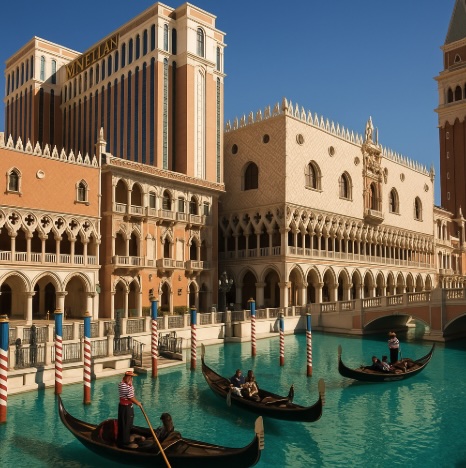
The Venetian Las Vegas (1999) pushed the concept further. It redefined architectural storytelling with replicas of St. Mark’s Square, the Rialto Bridge, and the Grand Canal. Architectural illusion became the Vegas brand, fantasy grounded in steel and stone.

Macau
East Meets West in Modern Casino Design
By the 2000s, the global centre of casino architecture had shifted east to Macau, now the world’s largest gambling market. Western grandeur met Eastern symbolism in a skyline of glass, gold, and geometry. TheVenetian Macau, designed by Aedas and HKS Inc., opened in 2007 and remains one of the largest buildings on Earth, with 10.5 million square feet of floor space and 3,000 suites. Its vast gaming floor, 550,000 square feet, embodies the scale of modern casino ambition.
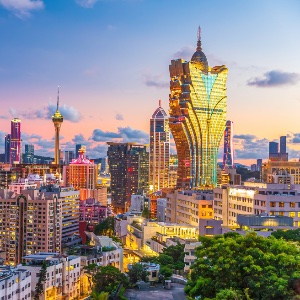
Nearby, the Grand Lisboa (2008), by Dennis Lau & Ng Chun Man Architects, introduced a distinctly Asian architectural language. Its lotus-inspired design reflects Macau’s cultural identity and the principles of feng shui, harmony, prosperity, and flow. Architect Dennis Lau described it as 'a symbol of growth rooted in tradition,' merging spiritual symbolism with futuristic form.
Other landmarks like City of Dreams (2009) embraced digital opulence, using LED façades and mirrored surfaces to create anever-changing skyline. Macau’s architectural identity lies in this fusion. European spectacle refracted through an Asian lens.

Casino Design: SINGAPORE and BEYOND, THE PSYCHOLOGY OF CASINO DESIGN, and THE FUTURE OF CASINO Design and ARCHITECTURE

Singapore and Beyond
Architecture as National Branding
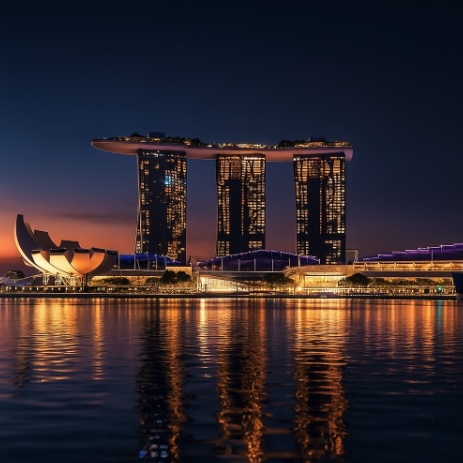
2010 Singapore entered the global stage with Marina Bay Sands, a masterpiece of modern casino architecture. Designed by Moshe Safdie, it reimagined the casino not as a place of escapism, but as a symbol of civic pride. Three curved towers support a 1.2-hectare SkyPark containing the world’s longest infinity pool. 150 metres long and 200 metres above ground. Safdie described the project as 'urban theatre', a fusion of architecture, spectacle, and public space.
Marina Bay Sands changed the language of casino design. No longer hidden from view, the casino became a national landmark, a statement of modernity and design excellence. The complex integrates luxury retail, theatres, art installations, and sustainable systems, representing the future of integrated resort design.

The Psychology of Casino Design
Behind the glitz and marble lies meticulous psychological design. Bill Friedman’s research on casino behaviour showed that successful casinos balance excitement with comfort, bright enough to energise, complex enough to engage, and open enough to avoid claustrophobia. Modern casinos have moved away from dark, maze-like layouts toward open-plan spaces with natural light, catering to a generation that values transparency and wellbeing.
Colour palettes and materials have evolved too: warm golds and reds once dominated, while today’s designers prefer calming blues, soft lighting, and organic materials. In Asia, feng shui continues to influence layout and orientation, entrances aligned with prosperity, fountains representing wealth flow, and curved corridors guiding fortune inward.
The Future of Casino Design and Architecture
Casino architecture is entering its most innovative era yet. AI-driven environments adjust lighting, music, and scent to personalise the experience in real-time. Augmented and virtual reality casinos are emerging, allowing players to navigate fully digital environments designed with the same spatial psychology as real ones.
Sustainability is also taking centre stage. The upcoming Wynn Al Marjan Island resort in the UAE aims to achieve carbon neutrality, combining Arabic minimalism with modern environmental engineering. Future casinos will be as focused on wellness and sustainability as spectacle, proving that the architecture of indulgence can also be responsible.
www.casinojester.co.uk

Overview
Casino architecture has always mirrored the human desire for wonder, from Monte Carlo’s chandeliers to Macau’s mirrored towers. It is a theatre and a temple, a stage where luck meets design, and fantasy becomes tangible. Each generation builds its vision of glamour, luxury, risk, and hope in concrete and glass. As the industry evolves, one truth remains: casinos are built not just to house games, but to tell stories, stories of ambition, beauty, and the eternal allure of chance.
Inspired by the world’s most iconic casino destinations? Experience their spirit from home, explore UK-licensed online casinos offering live dealer experiences, exclusive bonuses, and world-class entertainment. Play responsibly and discover the thrills of gaming today.
www.casinojester.co.uk

CJ Guides and Reviews
CJ Casino Guide
Beginner's Guide to Casinos
CJ History Guide
The History of Casinos
CJ Travel Guide
Top 10 Wildest Nights in Las Vegas History
The 15 Greatest Shows In Las Vegas History
Las Vegas’ Sexiest Scandals
CJ UK Guide
The Top UK Casinos
CJ Casino Review
Hippodrome Casino Review and Current Offers
Spin Genie Casino Review and Current Offers
Lord Ping Casino Review and Current Offers
ICE36 Casino Review and Current Offers
CJ Guides
Guides and Reviews Index
SEPTEMBER 2026
Top Features of UK Online Casinos
Playing at our recommended casinos offers an exciting and secure gaming experience. Enjoy generous online casino bonuses, a wide variety of gaming options, and robust security measures.

UK Regulated, secure & trusted

Huge variety of games, jackpots, free spins & bonuses

All casinos offer Responsible gambling tools

Fast, safe & simple deposits & withdrawals

Good Customer Service

Clear & simple design to ease usability
Trusted by top brands in the industry