



Gambler's Fallacy: A Player's Guide
Casinos sparkle with promise. The roulette wheel spins, the dice tumble across green felt, the slot reels blur with light and sound. Every gambler feels the pulse of chance, the possibility that fortune might shift at any moment.
But lurking within this glittering world of possibility is one of the most seductive and most dangerous myths in gambling: the Gambler's Fallacy. It is the mistaken belief that past independent random events change what will happen next, even though each spin, roll, or deal has the same odds as the one before.
It's the belief that if something happens more often than usual, it's “due” to change. Or if something hasn't happened for a while, it must be about to occur. Five reds in a row on the roulette wheel? Surely black is next. A slot machine that hasn't paid out in ages? Surely it's ready to hit a jackpot. The gambler's fallacy is also known as the Monte Carlo fallacy, named after the famous 1913 roulette incident at the Monte Carlo Casino, where black came up 26 times in a row, leading many to believe red was "due" and resulting in massive losses.
This belief feels logical. It feels fair. But it's completely false. And throughout gambling history, it has cost players fortunes. For UK online casino players, whether you're new to casino games or already experienced, understanding this mistake can help you avoid chasing false patterns, protect your bankroll, and make better decisions at the tables and on the reels.
Let's dive into the Gambler's Fallacy, where it comes from, why it feels so convincing, and how to make sure you don't fall for it when you play. We'll look at how it shows up in roulette, slots, blackjack, and craps, the psychology behind it, the Monte Carlo example, and practical ways to avoid this common gambling misconception.

Gamblers Fallacy: What Is the Gambler’s Fallacy, How It Appears in Casino Games, and The Psychology Behind the Fallacy
Casino Gambling Guide
What is the Gambler's Fallacy, Future Outcomes, and the Role of Independent Events?
At its core, the Gambler’s Fallacy is a misunderstanding of probability.
Imagine flipping a coin with a fair coin. In repeated coin flips, the odds of it landing on heads are always 50/50. But if you flip it five times and it lands heads every time, many people start to feel that tails must be due. The streak feels unnatural, so we expect “balance” to return. People often misinterpret random sequences and future random events, expecting patterns to emerge or balance out, even though each outcome is independent and not affected by any previous flip.
But probability doesn’t have memory. Each coin toss is a random event, and future flips are not influenced by previous outcomes. The coin doesn’t care what happened before; it has no running tally, no sense of fairness. The chance of heads or tails is always 50/50, no matter what came before. This illustrates that the probability of an outcome occurring in future random events remains constant, even though people erroneously treat a given sequence of results as if it changes the next outcome.
Casinos know this, and they thrive on it. Roulette wheels don’t “owe” you black after a run of reds. Slot machines don’t have memory banks waiting to “catch up.” The gambler’s fallacy is often linked to the law of small numbers and the representativeness heuristic, where people mistakenly believe that small samples should represent a larger population and expect balance in short sequences. Yet gamblers cling to the idea that patterns must correct themselves, rationalising randomness by finding patterns in random events. The fallacy arises from the mistaken belief that past independent events influence the probability of an outcome occurring in future random events. This is all rooted in a misunderstanding of randomness, where individuals believe streaks must eventually balance out in a random process. That’s the Gambler’s Fallacy in action.
How It Appears in Casino Games
The Gambler’s Fallacy shows up everywhere on the casino floor and online.
Roulette
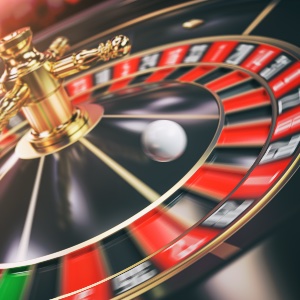
Perhaps the most famous setting, with Monte Carlo as the famous example. Picture the wheel spinning red, red, red, red, red… five times in a row. Crowds gather, convinced that black must be next. The truth? The odds of black are the same as before, roughly 18 out of 37 in European roulette, regardless of what came before. People expect a fair process that self-corrects, but in reality, a mixed sequence of outcomes, sometimes with streaks, sometimes alternating, is exactly what you’d expect from a random process like roulette. Erroneous beliefs about fairness and randomness can lead to significant financial losses, including betting on the wheel during a streak.
Slot Machines
A classic superstition: “This slot hasn’t paid out in hours, it’s about to pop!” In reality, modern slots run on random number generators (RNGs), making them a true random process. Each spin is independent, with no memory of the last. A machine can hit a jackpot twice in ten minutes, or go days without one; it’s pure chance. The gambler’s fallacy is often reinforced by a belief in a just world, where people expect outcomes to balance out over time, but this flawed reasoning can be costly.
Blackjack & Craps
Players often fall into fallacy thinking at the tables too. In blackjack: “The dealer has to bust soon; they’ve had too many good hands.” In craps: “The dice have been cold, they’re due for a hot roll.” But just like coins, each deal and roll is independent.
Casinos don’t correct gamblers who think this way. Why would they? These misconceptions fuel millions in losses every year.

The Psychology Behind the Fallacy
Why do so many intelligent people fall for the Gambler’s Fallacy? The answer lies in how our brains process randomness, a topic deeply explored in cognitive psychology and experimental psychology, fields that study why people misread chance and randomness through mental processes like perception, memory, and decision-making. Cognitive psychology helps us understand why cognitive biases and behavioral decision making often lead us astray, especially in gambling scenarios.
The Representativeness Heuristic
We expect small samples to look like the whole picture. The gambler's fallacy reflects an incorrect belief that small samples should look representative immediately, but the key difference from true randomness is that small runs often do not look balanced right away. When it doesn't, we assume a correction is coming. Such reasoning processes are common in human cognition and underlie many of our misconceptions about probability and chance.
Human Discomfort with Randomness
Pure randomness feels chaotic and unsettling. Human beings are natural pattern-seekers, and while that helps us make sense of the world in many settings, it often misfires when we judge random events. The Gambler's Fallacy is the mind trying to impose order where none exists. People also tend to search for an explanation even when a random sequence has no hidden cause, a classic example of how cognitive biases shape our perception of random events.
Illusion of Control
Gamblers often feel that their choices or timing influence outcomes. Reliance on expert opinion or a tipster can reinforce the illusion that timing or selection can sway an independent result. Standing at a slot machine, watching spins miss, we feel the jackpot is “ready.” In truth, our sense of control is just an illusion, and casinos design games to amplify that feeling.
Improving your ability to understand statistical information can be a powerful way to mitigate the gambler's fallacy. Psychological research shows that the best way to resist the fallacy is to treat each event as a new beginning, not as a continuation of prior outcomes. Interestingly, an individual's susceptibility to the gambler's fallacy may decrease with age.

Gamblers Fallacy: Understanding Independent Events, Famous Examples in Gambling History, and Why the Gambler’s Fallacy Feels So Convincing
Understanding Independent Events
To truly grasp why the gambler's fallacy is so misleading, it's important to understand the concept of independent events. In probability, independent events are those where the outcome of one event has absolutely no effect on the outcome of another. This is the basis of statistical independence. This means that no matter what happened before, the chances for the next event remain exactly the same.
Take the classic example of flipping a fair coin. Each time you toss the coin, the probability of it landing on heads or tails is always 50%, regardless of how many times heads or tails have come up in previous results. Even if you've just seen five heads in a row, there is no increased probability of tails on the next trial—the next flip is still a fresh start, there’s no “memory” in the coin, and past events don't influence the future probabilities. In an independent process, past outcomes do not make future events more likely to occur.
This principle applies to all sorts of random outcomes in casino games, from the spin of a roulette wheel to the roll of dice. Each spin or roll is an independent event, meaning the likelihood of a particular outcome—like landing on black or rolling a seven—remains constant, no matter what happened before. Unless two events are causally linked, one should not be used to predict the other. Understanding this is crucial for making informed choices and avoiding the mistaken belief that previous events somehow make certain future outcomes more likely.
In coin tosses there are only two outcomes, but the same rule of independence still applies. By recognising that independent events don't “owe” you a win or a loss, you can avoid falling for the gambler's fallacy and enjoy casino games for what they are: games of pure chance, where every outcome is as likely as the last.

Famous Examples in Gambling History: The Monte Carlo Casino
The most legendary example of the Gambler's Fallacy, often called the 'Monte Carlo fallacy', happened at the casino de monte carlo in 1913 and involved its famous roulette wheel. Long before that, Laplace's philosophical essay on probabilities had already explored probabilistic reasoning and the mistaken beliefs people form about chance.
On an August night, the roulette wheel landed on black. Then black again. And again. By the 10th spin, players were piling money on red, convinced it had to appear soon. By the 20th spin, the casino floor was packed, fortunes riding on red.
It didn't come. The ball landed on black 26 times in a row. Players lost millions in today's money due to their erroneous beliefs about the random process. This incident is the origin of the term 'Monte Carlo fallacy', as gamblers misunderstood the nature of random outcomes and kept betting against black, believing red was "due".
Other gamblers have fallen victim too. Professional players in Vegas have chased “due” outcomes, only to bankrupt themselves instead of the house. And today, online casinos still see players chase “cold” slots or “streaky” roulette wheels, repeating the same error made more than a century ago in Monte Carlo.

Why the Gambler’s Fallacy Feels So Convincing
The fallacy endures because it taps into our deepest beliefs about luck and fairness.
· Stories we tell ourselves: “It's my turn to win.” People tend to develop erroneous beliefs and cognitive biases about how luck works, convincing themselves that a win is due after a losing streak.
· Superstitions: Lucky charms, rituals, and habits reinforce the idea that outcomes can be bent. These behaviors are often rooted in cognitive biases that make us see patterns where none exist.
· The glamour of the streak: Casinos market the romance of hot streaks and dramatic turnarounds. It's exciting to believe fortune has a rhythm, even if it doesn't.
These are two fallacies: the gambler's fallacy and the hot hand differ because one expects reversal, while the other treats a hot hand as proof a streak will continue.
That's why the fallacy feels logical. People often fall prey to these cognitive biases, leading to the persistence of the gambler's fallacy in gambling and other decision-making scenarios. It dresses itself up as intuition, luck, and “knowing the game.” In reality, it's just our minds tricking us.


Gamblers Fallacy: How to Avoid the Gambler’s Fallacy and Beyond Casinos, The Fallacy in Everyday Life
How to Avoid the Gambler’s Fallacy
If you want to play smart, you need to guard yourself against fallacy thinking and avoid falling prey to erroneous beliefs. Avoiding these cognitive traps is key to making informed choices and protecting yourself from the gambler’s fallacy, which can impair decision making and lead to significant financial losses.
Here’s how:
· Remember Independence: Each spin, deal, or roll is independent. Past outcomes do not influence the next.
· Set Clear Budgets: By setting a gambling budget and sticking to it, you avoid chasing losses under the illusion that a win is “due.”
· Embrace Randomness: Accept that streaks happen, both winning and losing. They’re not destiny, just chance clustering.
· Beware of Superstitions: It’s fun to have lucky rituals, but remember: they don’t change probability.
Tip: Modern online slots use audited RNGs. There’s no such thing as “hot” or “cold” machines. Play them for entertainment, not because you think a jackpot is “ready.”
By recognising the fallacy and understanding statistical information, you not only protect your bankroll and avoid falling prey to erroneous beliefs, but you also enjoy the roller coaster of casino play with clear eyes.

Beyond Casinos, The Fallacy in Everyday Life
The Gambler’s Fallacy doesn’t stop at casinos. It creeps into daily life too.
Stock Market: “This stock has dropped five days in a row, so I’ll keep holding it because it’s due for a rebound, while selling the one that’s been rising because it must be due to fall.”
Sports Betting: “This football team has lost five matches; they’re due a win.”
Lottery players: often stop selecting numbers that have recently won, believing those numbers are less likely to win again soon, which is an example of gambler's fallacy.
Life Decisions: “I’ve had so much bad luck recently, surely good luck is around the corner.”
In all these cases, people mistake independent events for connected ones. Just like in casinos, it can lead to costly mistakes and poor decisions outside gambling.
The gambler’s fallacy also affects decision makers in many fields by overemphasizing the role of past occurrences when predicting future outcomes. For example:
- Financial decisions: Investors may believe a stock that has performed poorly for an extended period is ‘due’ for a rebound, or hold onto depreciated stocks expecting a turnaround, while selling appreciated stocks out of fear they will soon decline.
- Sales teams: Teams might misinterpret patterns in customer behavior, assuming a period of low sales will be followed by a surge, or that a streak of high sales will inevitably end.
- Loan officers: After approving several loans in a row, loan officers may be less likely to approve the next application, influenced by previous outcomes.
- Asylum judges: Judges are less likely to approve a claim after granting two previous claims, demonstrating the gambler’s fallacy in high-stakes judicial decisions.
- Umpires: In baseball, umpires are less likely to call a strike after two consecutive strikes, reflecting the fallacy in their decision-making process.
- Risk management: Leaders may underestimate risks after a series of positive outcomes, believing negative results are less likely.
The gambler’s fallacy can lead to erroneous decision-making and significant financial losses in sectors like investment, sales, and lending, as decision makers misjudge the significance of past occurrences and expect reversals or streaks that have no basis in probability.
Gambling is at its best when it’s fun, safe, and free from illusions. The Gambler’s Fallacy has tricked players for centuries, but today you can play smart. Licensed UK online casinos use certified random number generators, meaning the games are fair, transparent, and independent. No fallacies required.
www.casinojester.co.uk
Overview
The Gambler's Fallacy is one of the most enduring myths in gambling. It's easy to see why. It makes the world feel fairer, more predictable, more exciting. But in truth, it's a trick of the mind, one that has cost players millions, from Monte Carlo in 1913 to online slots today.
· The gambler's fallacy is often linked to the law of small numbers, where people mistakenly believe that small samples should represent larger populations.
· It is an erroneous belief that past independent results change the odds of the next result, even when each event is separate.
· The retrospective gambler's fallacy occurs when individuals make inferences about past events based on the outcomes of subsequent events, reflecting a similar cognitive bias as the gambler's fallacy.
· Investors often exhibit gambler's fallacy by holding onto depreciated stocks, believing they are due for a rebound, while selling appreciated stocks under the assumption they will soon decline.
· The gambler's fallacy is exemplified by the Monte Carlo incident in 1913, where gamblers lost millions betting against black after it appeared 26 times in a row on a roulette wheel.
· Casinos will always sparkle with glamour, excitement and chance, and streaks will always happen. The trick is to enjoy the ride without chasing false patterns. Play for the thrill, not for the fallacy.
Because in the end, the real secret isn't that casinos owe you a win, it's that every spin is a fresh start.
www.casinojester.co.uk
CJ Guides and Reviews
CJ Casino Guide
The Funniest and Strangest Casino Superstitions
CJ Roulette Guide
Beginner's Guide To Roulette
CJ Slots Guide
Beginner’s Guide To Slot Machines
CJ Blackjack Guide
Beginner's Guide To Blackjack
CJ Craps Guide
Beginner's Guide to Craps
CJ Player Guide
Responsible Gambling Tools Explained
CJ Casino Review
10bet Casino Review and Current Offers
gENTING Casino Review and Current Offers
Mega Casino Review and Current Offers
Betway Casino Review and Current Offers
CJ Guides
Guides and Reviews Index
SEPTEMBER 2026
Top Features of UK Online Casinos
Playing at our recommended casinos offers an exciting and secure gaming experience. Enjoy generous online casino bonuses, a wide variety of gaming options, and robust security measures.

UK Regulated, secure & trusted

Huge variety of games, jackpots, free spins & bonuses

All casinos offer Responsible gambling tools

Fast, safe & simple deposits & withdrawals

Good Customer Service

Clear & simple design to ease usability
Trusted by top brands in the industry