






Casino License: Comparing Regulations
In North America, Canada, The UK and Europe .
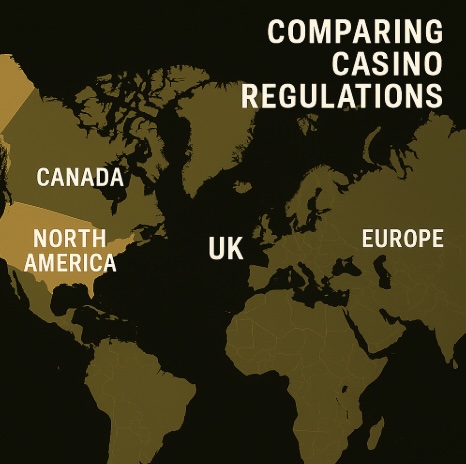
A casino license is the legal authorisation issued by a regulator that allows a casino to operate under rules for fairness, security, transparency, and responsible gambling. In North America, Canada, the UK, and Europe, that regulation is the backbone of safe, fair, and trustworthy gambling: without it, players risk sending money to unlicensed operators that may ignore game fairness, bonus transparency, or player protection standards. The global online and mobile gambling industry is worth hundreds of billions of dollars annually, and regulators worldwide have adopted very different approaches to licensing, taxation, advertising, and consumer protection, creating a patchwork landscape where a casino deemed safe in one jurisdiction might not meet the same standards elsewhere.
This guide is written for online casino players, especially UK based readers looking for trustworthy, licensed casino options, whether they are new to online gambling or more experienced and comparing bonus terms, game quality, and safer gambling tools. It explains how casino regulation works across four major regions, North America, Canada, the United Kingdom, and Europe, and compares the rules that shape how casinos operate, what protections players get, and what future regulatory trends may mean when choosing where to play.
Casino License: Gambling Business, Gambling Software, Gambling Licence, Gambling Commission, North America, Canada, and The United Kingdom, UK
Global Online Gambling and Casino Regulations and Licensing
North America: The United States’ Patchwork System
The United States is one of the fastest-growing online gambling markets in the world, but it is also one of the most complicated. Unlike Europe or the UK, where national regulators oversee online casinos, the US regulates internet gambling through state-by-state gambling laws. Following the repeal of the Professional and Amateur Sports Protection Act in 2018, states were free to launch legal sports betting and regulate casino games independently. Efforts to legalize sports betting accelerated after that ruling.
By 2025, over 30 states will have legalised some form of legal online gambling under different online gambling laws. States like New Jersey, Pennsylvania, Michigan, Connecticut, and West Virginia offer fully regulated online casinos. Others, like New York and Illinois, have limited their frameworks to online sports betting only, with online casino gaming not yet fully authorised. This creates an inconsistent landscape where players in one state can access dozens of casino apps, while their neighbours may have no legal options at all. Some forms, such as online poker and daily fantasy sports, are regulated differently by state.
Technology plays a major role in US regulation, especially for online gambling platforms. Operators must use geolocation tools to ensure players are physically inside state borders when playing. Strict KYC (Know Your Customer) protocols are enforced to combat fraud and underage gambling. Licensing rules also cover financial transactions and money laundering prevention. Despite these measures, the absence of a single federal law, along with ongoing debate around the Federal Wire Act and the Wire Act, means the US remains fragmented, with interstate poker compacts and shared liquidity still limited.
Canada: Provincial Autonomy and Ontario’s Leadership
Canada’s regulatory framework is unique because it allows provinces to regulate gambling activities. Until recently, most provinces operated government-run lottery corporations that offered limited online gambling, including lottery games rather than a national lottery model. This changed in 2022 when Ontario launched a regulated online gaming market open to private operators.
By 2025, Ontario will have become one of the world’s most competitive online gambling market environments, with dozens of licensed online casinos and other licensees overseen by iGaming Ontario. Major brands like BetMGM, DraftKings, and Bet365 are among the online operators holding licenses, offering players access to regulated casino games, poker, and sportsbetting. Ontario’s model is often compared to Europe’s, emphasising competition, private-sector involvement, and legal compliance.
Other provinces, such as British Columbia and Quebec, still operate primarily through government monopolies, though they allow some international operators. This patchwork approach means Canadian players outside Ontario often turn to offshore casinos, raising consumer protection and taxation concerns.
Canada’s regulatory model is still evolving, but Ontario’s success is pushing other provinces to consider opening their markets to private operators.
United Kingdom: The Gold Standard of Gambling Regulation under the Gambling Act 2005
The United Kingdom has long been considered the gold standard of online gambling regulation. In Great Britain, a casino licence is a mandatory legal authorisation issued by a regulatory body for offering gambling services. The UK Gambling Commission (UKGC), established under the Gambling Act 2005, regulates the uk gambling industry in Great Britain and is one of the strictest regulatory bodies in the world, overseeing both remote gambling and wider gambling services while acting as the licensing authority for operating licence and personal licence applications. Its mission is to ensure that gambling is conducted with fair play, openly, and free from crime through fair gaming practices while protecting vulnerable players.
There are three types of UK gambling licences: operating, personal, and premises; operating licences are issued by the Gambling Commission, while premises licences for non remote operations are issued by local authorities.
The UKGC has implemented some of the most comprehensive consumer protection measures globally. These include bans on credit card deposits, with credit card companies also prevented from supporting such gambling payments, affordability checks to prevent players from spending beyond their means, and restrictions on advertising that could target vulnerable groups. Tighter UK rules have also put more scrutiny on online gambling advertising. Bonus offers and promotions are tightly controlled, with strict transparency rules.
While operators often criticise the UKGC for being overly restrictive, most industry observers acknowledge that its stringent regulations help make the UK market one of the safest for players, while also giving UKGC license holders market access to one of the largest gambling markets and international recognition. The UK's experience has influenced regulation across Europe and beyond, though few countries have matched its level of enforcement. To operate legally, firms need a gambling licence and, where relevant, a gambling operating licence covering remote casino, land based, or ancillary gambling activity, while personal licences are required for key personnel; licensed operators must meet responsible gambling practices and player protection standards, including setting deposit limits, and comply with the License Conditions and Codes of Practice and Anti Money Laundering obligations.
Casino License: Gambling Industry, Gambling Operating Licence, Gambling Laws, Annual Fee, Europe and Key Differences in Regulatory Approaches
Europe: A Fragmented but Mature iGaming Market
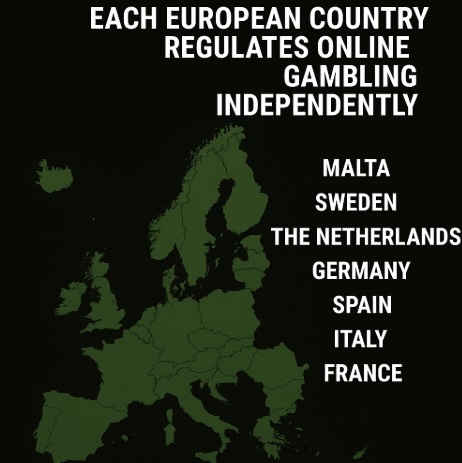
Europe presents a mixed picture across the European Union, where EU countries regulate online gambling in different ways. Unlike the UK’s centralised system, EU online gambling is governed at national level rather than under one shared framework. This has created a diverse patchwork of licensing authorities, tax regimes, consumer protection measures, and oversight by relevant authorities.
Overall, Europe offers some of the safest gambling environments, but businesses in the online gambling sector still face high compliance costs as the wider gambling industry adapts to different national rules.
Malta
· The Malta Gaming Authority (MGA) remains one of the most prestigious licenses in Europe, with strong standards that appeal to many gambling operators. It offers relatively low taxes and strong consumer protections, which attract hundreds of international operators who use Malta licences to operate legally across multiple markets and provide their services legally where permitted.
Sweden
· Introduced strict licensing rules in 2019, with heavy restrictions on bonuses and marketing. Operators must adhere to deposit limits and mandatory self-exclusion programs.
Netherlands
· Legalised online gambling in2021, opening the Dutch market to licensed betting platforms with the Kansspelautoriteit (KSA) as regulator. The Dutch framework has strict advertising rules and fines for unlicensed gambling operations.
Germany
· Established a nationwide licensing framework in 2021, known as the Glücksspielstaatsvertrag, to regulate online casinos and online betting. It allows online casinos but imposes strict limits on stakes, deposits, advertising, and some payment services, frustrating some operators.
Spain, Italy, and France
· Each has mature, regulated markets with strong taxation, regulated products spanning casino-style games and other forms of online gambling, but thriving player bases.
Overall, Europe offers some of the safest gambling environments in the world, but its fragmentation can make compliance costly for operators.
Key Differences in Regulatory Approaches
Comparing North America, Canada, the UK, and Europe highlights significant differences:
Taxation
· Europe varies widely: Malta’s low rates attract operators, while Germany and France impose high taxes. The UK is moderate but strict in compliance. The US applies state-level taxes, some very high, making profitability uneven.
Market Openness
· Ontario and Malta encourage competition, creating better conditions for gambling businesses, while Sweden and Germany impose restrictive frameworks. That openness often determines whether a gaming company can enter regulated jurisdictions. The US is highly fragmented, and the UK is open but tightly controlled.
Consumer Protections and Player Protection
· The UK leads globally, while Sweden and the Netherlands also enforce strict rules. The US and Canada are catching up, but vary by state or province.
These differences affect how operators expand and how players experience casinos.
Advertising
· The UK and Sweden are among the strictest on online gambling advertising. The US allows aggressive marketing, while Europe varies. Rules for ads promoting online gambling sites differ widely by jurisdiction.A
Casino License: Impact On Players, Anti Money Laundering, Application Process, Ensure Fairness, Remote Licence, UK Licensed Operators, responsible gambling policies, Betting Shops, Application Fee, and The Future of Regulation
IMPACT ON PLAYERS
For players, regulation directly impacts trust, safety, and the gaming experience:
United States
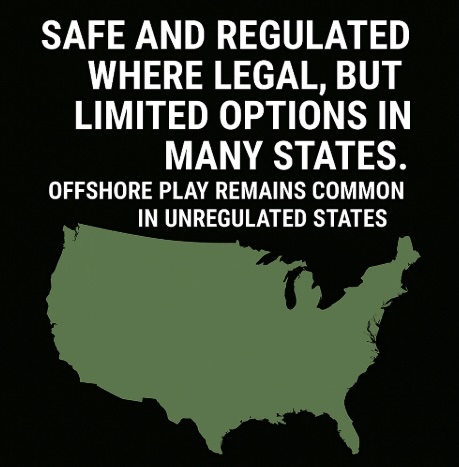
· Safe and regulated through a legal online casino where allowed, but limited options in many states. Where regulation is absent, online gambling illegal can still be the legal position for some products. Offshore play remains common in unregulated states, unlike state-regulated options that avoid unlawful internet gambling.
Canada
· Ontario players benefit from a competitive, regulated market. Elsewhere, players face fewer protections and rely on offshore casinos.
United Kingdom
· One of the safest markets globally, as strict oversight includes the risk that the Gambling Commission (UKGC) can revoke licences for non compliance, but stricter rules mean fewer bonuses and more affordability checks.
Europe
· Varies significantly. Players in Malta, Spain, and Italy enjoy safe, regulated markets, while those in countries with weaker frameworks risk exposure to offshore operators.
The bottom line: regulation enhances trust but shapes incentives, promotions, and player freedom differently.
The Future of Regulation (2025–2030)
Looking ahead, several trends will shape global regulation:
United States
· More states will legalise online casinos, with interstate compacts potentially expanding poker liquidity, while formats such as betting exchanges may remain selectively regulated. Horse racing wagering has long followed a different legal path under the Interstate Horseracing Act. The Illegal Gambling Business Act also remains part of the older federal backdrop shaping U.S. enforcement. Pressure for federal oversight may grow, but the state-based system will likely continue.
Canada
· Ontario’s model will inspire other provinces to open up. Expect gradual expansion, though political hurdles remain.
United Kingdom
· The UKGC will continue tightening rules, emphasising affordability, responsible gambling, and advertising restrictions. In the UK, the application process will remain rigorous, requiring submission of required information, payment of the application fee, and compliance assessments by the UK Gambling Commission. The Commission issues operating and personal licences, and for a casino license it assesses applicants’ integrity, honesty, competence, and financial stability; applicants must be over 18, and operating licence applications take about 16 weeks to process. Licence fees vary by licence type and projected gross gambling yield, with the application fee for operating licences ranging from £4,224 to £91,686, while annual fees for large operators can exceed £793,000 based on gross gambling yield and other fees.
Europe
· Greater harmonisation may occur, particularly around AML (Anti-Money Laundering) rules, but fragmentation will remain. Germany may relax some restrictions under operator pressure, while Spain and Italy will refine advertising rules.
Overall, expect stricter global standards, greater focus on consumer protection, and continued market growth.
Overview
Regulation Shapes the Experience
Casino regulations in North America, Canada, the UK, and Europe in 2025 highlight how cultural, political, and economic factors shape gambling markets, online gambling operations, and broader gambling operations. The US is dynamic but fragmented. Canada is moving toward greater openness, led by Ontario. The UK remains the global benchmark for consumer protection, while Europe demonstrates the challenges of fragmented regulation.
Major gambling regulators include UK Gambling Commission and Malta Gaming Authority. A personal management license costs £370 and takes eight weeks to apply. Personal functional licenses cost £185 to apply. Personal licenses must be renewed every five years.
For players, this means different levels of safety, different bonus structures, and choices depending on where they live. It means adapting strategies to fit each jurisdiction’s unique rules for operators and affiliates.
The one constant across all regions is the trend toward stronger responsible gambling protections and greater regulatory oversight. As the industry grows, so will the systems designed to keep it safe and fair for everyone.
Want to play with confidence today? Explore our list of UK-licensed casinos for trusted, safe, and enjoyable online gaming.
www.casinojester.co.uk
CJ Guides and Reviews
CJ Info Guide
The UK As A Regulated Gambling Jurisdiction
European Online Gambling Statistics 2025
Why Africa is the Next Big Market for Online and Mobile Casinos
Gambling Growth in Asia
Online Casino Gambling Styles Around the World
CJ Casino Review
Betway Casino Review and Current Offers
William Hill Casino Review and Current Offers
Genting Casino Review and Current Offers
Hippodrome Casino Review and Current Offers
CJ Guides
Guides and Reviews Index
SEPTEMBER 2026
Top Features of UK Online Casinos
Playing at our recommended casinos offers an exciting and secure gaming experience. Enjoy generous online casino bonuses, a wide variety of gaming options, and robust security measures.
UK Regulated, secure & trusted

Huge variety of games, jackpots, free spins & bonuses
All casinos offer Responsible gambling tools
Fast, safe & simple deposits & withdrawals

Good Customer Service

Clear & simple design to ease usability
Trusted by top brands in the industry