







Playing Cards: History and evolution
The Silent Stars of the Casino Floor.
When we think of casinos, we imagine flashing slot machines, glitzy roulette wheels, or stacks of colourful chips. But beneath all the glamour, the real stars of the casino are deceptively simple: playing cards, rectangular paper or plastic cards marked with suits and numbers, used in countless gambling games and still central to casino play in land based rooms and online casinos alike.
From the snap of a blackjack dealer flicking a card across the felt to the hush of a poker showdown when the river card lands, playing cards embody the drama and the gambling strategy. For UK players researching how casino games work, whether you’re completely new to online gambling or already familiar with the tables, understanding the cards themselves adds context that flashy software and bonus offers never can.
This guide follows the history and evolution of playing cards from their earliest origins to the standard decks we know today, then moves through the card games that made casinos famous, the design choices that shaped modern decks, the security features that protect fair play, notable cheating scandals, and the shift from physical cards to the online casino era.
They’re light, fragile, and endlessly shuffled, yet they’ve shaped gambling for centuries. Knowing how playing cards were designed, standardised, protected, and adapted for digital casino games gives you a clearer view of the games you play and more confidence when choosing trusted UK licensed casinos.
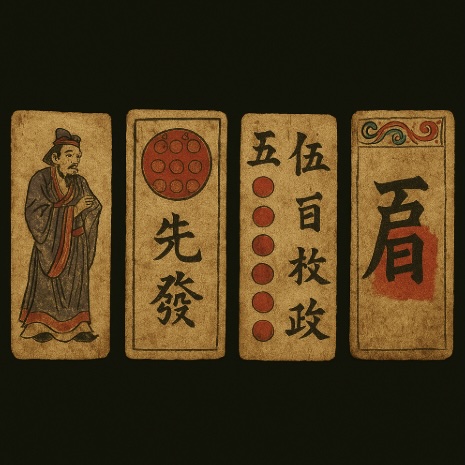
Playing Cards: Early Origins Of Playing Cards, Card Makers, Mystery Decks, Card Backs, Standardisation of Card Designs, and Cards Enter The Casino World
Casino Playing Cards History Guide
Early Origins of Playing Cards
The true origins of playing cards date back over a thousand years, spanning continents and cultures. The early history of playing cards can be traced to early cards found in ancient China, Egypt, and the Middle East, where they evolved into different designs, suits, and functions.
China (9th century)
· The earliest evidence of playing cards comes from China, during the Tang dynasty. These early cards were linked to the use of paper money, with “money-suited” designs that were both playful and practical. Gambling with cards was a natural extension of China’s inventive spirit. The 'leaf game' was an early Chinese card game involving drawn leaves, played during the Tang Dynasty, often associated with drinking and forfeits, and is considered a precursor to modern playing card games. Chinese money cards featured suits such as cash, strings, myriads, and tens of myriads, influencing the development of suited decks in other cultures. Early cards may have served as 'play money' for gambling before evolving into entertainment cards. Tile games like dominoes and mahjong may have influenced or been related to the development of playing cards in ancient China. Playing cards likely originated in 9th-century China during the Tang Dynasty, evolving from paper currency or domino-like games.
India & Persia
· Games like “Ganjifa” feature ornate circular cards and spread through India and Persia. These decks often had dozens of suits and were hand-painted, making them prized possessions of nobility. Playing cards are believed to have originated in China and then spread to India and Persia.
Europe (14th century)
· Cards entered Europe via trade routes, first appearing in Italy and Spain. The earliest documented evidence of playing cards in Europe appears in the 1370s in Italy, Spain, and Switzerland, with these references marking key dates in the European timeline. They quickly spread through aristocratic courts, where decks were hand-painted luxuries, often gilded with gold. The game existed in Europe by the 14th century, as evidenced by historical records. The earliest reference to playing cards in Europe appears in a manuscript written by a German monk in 1377. Cards entered Europe through the Islamic Mamluk dynasty in Egypt during the late 13th to early 14th century. Playing cards were introduced into Europe from the Islamic empire, where cups and swords were added as suit symbols. The suits of early European cards were derived from Mamluk decks, which included cups, swords, coins, and polo sticks. The first European references to playing cards date from the 1370s and come from various regions including Catalonia, Florence, and France. Playing cards spread rapidly across Europe during the late 14th century, influenced by trade and cultural exchanges. Playing cards began to appear in Europe during the late 1300s and early 1400s, with origins possibly traced back to Asia, particularly China, or developing independently in Europe.
Historical verdict: What began as painted slips of paper evolved into a cultural export that reshaped gaming worldwide.
Standardisation of Card Designs and Court Cards
By the late Middle Ages, playing cards had become a European obsession. However, their designs varied wildly, and it took centuries for today’s familiar deck to emerge. The historical development of card suits, suit signs, and suit symbols reflects a rich tapestry of regional patterns, with different countries and cultures creating their own distinctive styles, suit imagery, and face designs.
French Suits
· By the 15th century, French card-makers standardised the four suits we still use today, hearts, spades, diamonds, and clubs. The French developed the suit imagery we find on playing cards today, dividing the suits into two colours: red and black. Their simple geometric shapes were easier to reproduce than ornate hand-painted designs, allowing mass production.
Court Cards
· Kings, queens, and jacks (originally “knaves”) reflected medieval court life. Traditional decks often included three court cards, such as king, knight, and foot-servant, a structure influenced by the hierarchy found in Mamluk cards, which featured the malik (king), nā'ib malik (viceroy or deputy king), and second or under deputy. Mamluk cards, originating from Egypt, included suits like cups, swords, coins, and polo sticks, and their court card structure influenced European designs. The evolution of latin suits (swords, clubs, cups, and coins), italian suits, spanish suits, and german suits demonstrates how different regions adapted suit symbols and court cards. German manufacturers developed their own suits, acorns, leaves, hearts, and bells, reflecting rural life and local traditions. Italian playing cards and the Italian deck are notable for their distinct design and suit system, which differ from Spanish and French styles. Regional patterns meant that each country developed its own unique designs and suit signs, contributing to the diversity of playing cards across Europe.
52-Card Decks
· By the 16th century, the 52-card deck became dominant in France and England. The introduction of the standard deck, modern deck, and corner indices, small numbers and suit symbols in the corners, allowed players to see their cards more easily without fanning them out completely, and these features became standardised from the 15th to 19th centuries. With colonisation and trade, the standard 52-card deck with four suits in red and black and two Jokers spread worldwide, eventually becoming the global standard.
English Influence: England’s adoption of the French-suited deck cemented its place in history. English decks also introduced the ace of spades stamp, originally a tax mark, which later became an iconic design flourish.
Evolution verdict: The French suits and English deck spread worldwide, making cards universal symbols of gaming.

Cards Enter the Casino World
Playing cards didn’t just become a household pastime; they became the core of gambling houses.
Europe’s Salons
· By the 17th and 18th centuries, European aristocrats flocked to gambling salons where games like faro, vingt-et-un (the forerunner of blackjack), and baccarat ruled the tables. Early trick taking games, depicted as far back as the 14th century, played a significant role in European gambling culture and influenced the evolution of many classic card games.
· The elegance of playing cards fits perfectly with the luxury of Monte Carlo, where cards have become synonymous with high society and risk.
America’s Saloons & Riverboats
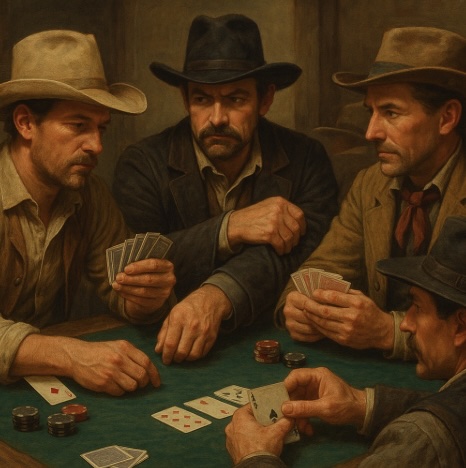
· In the 19th century, poker took hold on Mississippi riverboats and frontier saloons. Here, cards were tools of both entertainment and survival, often played with guns on the table. The Joker was introduced to the deck around 1860, originally serving as the highest trump card in the game of Euchre, before evolving into a wild card in poker by 1875, adding new layers of strategy and unpredictability.
· Faro, blackjack, and poker dominated American gambling culture, embedding cards deep into the mythology of the Wild West.
Birth of Modern Casino Games
· By the time Las Vegas rose in the mid-20th century, playing cards were already immortalised as the core of the casino floor. Poker, blackjack, and baccarat became the holy trinity of card-based gambling, each with its own aura of glamour and excitement. Casinos also featured a variety of other games, such as Skat, Jass, Mus, and Tarock, each contributing to the rich tapestry of gambling culture and showcasing the diversity of regional card patterns and rules.
Casino verdict: Cards are not just props; they are the beating heart of the casino experience. Throughout history, playing cards were often linked to gambling, which led to legal restrictions and moral concerns in many societies.
Playing Cards: Famous Casino Card Games and Their Influence, Security and Casino Cards, Bicycle Playing Cards, Huge Range, Card Inn, and Famous Card Cheating Scandals

Famous Casino Card Games and Their Influence
Playing cards are versatile, spawning countless games. But a few stand above the rest in casino history. Modern playing cards have evolved into the standard deck of 52 cards with four suits in red and black and two Jokers, a format now recognized worldwide.
Blackjack: The Game of 21
· Originating from the French “vingt-et-un,” blackjack became an American classic.
· Its mix of simple rules and strategic depth made it one of the most played casino games in Vegas.
· Stories of card counters, from MIT students to Hollywood films, cemented blackjack’s legend.
Poker: From Saloon to World Stage
· Born in the American frontier, poker evolved from bragging games and faro.
· American manufacturers pioneered printed decks and began producing their own decks with unique designs and branding, shaping the look and feel of poker cards.
· Bicycle Playing Cards, produced by the United States Playing Card Company (USPCC)—the industry-leading card company—are the most widely recognized decks in the world and are closely associated with poker and casino games.
· It grew into a cultural phenomenon, culminating in the World Series of Poker (WSOP) in Las Vegas.
· Poker stars like Doyle Brunson, Phil Hellmuth, and Daniel Negreanu became celebrities in their own right.

Baccarat: The Aristocrat’s Choice
· Baccarat has roots in Italian and French nobility.
· It became famous in Monte Carlo, with James Bond helping make it iconic in Casino Royale.
· High-roller baccarat remains a favourite in Macau, where fortunes change hands on the turn of a card.
· Playing cards are still evolving today, with many custom decks available for various games and purposes.
Game verdict: Cards gave birth to legends, myths, and the glamour of casino gaming.
Security and Casino Cards
Casinos handle millions in bets daily, so their cards must meet rigorous standards. Ordinary playing cards won’t do. The evolution of playing cards owes much to early card printers, whose advancements in printing technology, such as the invention of woodcuts and movable type around 1440, made it possible to produce multiple copies of playing cards more efficiently. German manufacturers further improved the ability to produce playing cards in massive quantities using wood-cutting and engraving techniques, leading to mass production and making cards more accessible. Cheaper methods of production eventually allowed playing cards to become available for everyone, moving away from expensive, hand-painted cards that were once reserved for the wealthiest individuals. Initially, playing cards were produced using artisan methods that were time-consuming but resulted in sturdy cards, often created for collectors or as curios for princely display cabinets. The development of printing processes, including Gutenberg's printing press, greatly advanced the manufacturing of playing cards. As the number of cards sold increased, governments imposed regulations and taxes on their production and importation. In England, stamp duties were introduced, and the Ace of Spades became a symbol of these taxation laws, manufacturers would design and stamp their own ace, known as the 'own ace,' to comply with tax requirements. Early Moorish playing cards are sometimes found as uncut sheets, preserved as historical artifacts that highlight the original, uncoloured state of the cards.
Security Measures
· Unique Back Designs: Casino decks feature intricate patterns to prevent marking.
· Plastic Coated Cards: Durable and resistant to bending or tampering.
· No Re Use: Once used for a short period of time, cards are destroyed or sold as souvenirs. New decks typically arrive in simple packaging, usually tuck boxes wrapped in cellophane, before they are opened for play.
· Cut Cards: Solid-colour cards used to block the lower cards of the deck, preventing cheating.
· Sharp Corners vs. Rounded Corners: Subtle design choices help prevent edge sorting.

Famous Card Cheating Scandals
· Marked Decks: Players using invisible ink or tiny scratches on card backs or edges to identify cards.
· Edge Sorting: Most famously exploited by poker pro Phil Ivey in a baccarat scandal at Crockfords in London, where subtle irregularities in a repeated pattern can help skilled cheats identify cards.
· Stacking the Deck: Old saloon tricks that still fascinate gamblers today.
Security verdict: Cards may look fragile, but casinos design, produce and guard them like treasure.

Playing Cards: The Art and Design Of Casino Cards, Collectable Playing Cards, Worldwide Shipping, Cheating, Legends and Infamous Stories, Black Roses Playing Cards, Poker Players, Evolution into the Digital Age

The Art & Design of Casino Cards
Playing cards are not just tools; they're also art. The evolution of suit symbols, ranging from flowers, animals, and shields to other everyday objects, reflects the rich history and cultural diversity of playing cards. Early and regional decks often featured everyday objects as suit symbols, connecting the imagery to daily life and folk beliefs. Numeral cards, which display the face value and numbering, have played a key role in the design and usability of playing cards, with their style and arrangement varying across regions and eras. Many countries and manufacturers have developed their own designs, resulting in unique patterns and artwork tailored to local games and preferences. Collectible souvenir decks, known as such packs, often feature pictorial designs of scenic views, trains, or landmarks, and are prized for their visual appeal rather than gameplay. Serious collectors also treat some decks as part of a wider collection, and the largest known playing card collection exceeds 11,000 decks. In Japan, flower cards—specifically hanafuda, hold cultural significance, with their flower-themed designs historically linked to gambling activities and the yakuza. These cultural variations in playing cards often include different suit symbols, such as flowers, animals, and everyday objects, highlighting the diversity and uniqueness found worldwide.
· The Worshipful Company of Makers of Playing Cards was incorporated in 1628.
· Bee & Bicycle Brands: Two iconic casino-grade card manufacturers produce durable decks with intricate patterns.
· Luxury Decks: High-roller rooms sometimes use specially designed decks with gold leaf or unique artwork.
· Collectable Casino Decks: Tourists and collectors prize decks printed with specific casino logos, from the Sands to Caesars Palace.
Even online, the artistry continues. Digital card designs in online poker and blackjack often replicate the feel of real-world decks, keeping tradition alive.
Design verdict: Playing cards are miniature canvases, prized for their artistic value as much as for gameplay, elegant, artistic, and instantly recognisable.
Cheating, Legends & Infamous Stories
Cards have inspired countless legends of cheating, conmen, and casino scandals.
· Wild West Sharps: Outlaws with hidden aces up their sleeves.
· Vegas Scandals: Teams marking cards or swapping decks in elaborate schemes.
· Hollywood Myths: Films like Rounders and Casino glorify the allure of card games and the cheaters who try to beat the system.
· Bond’s Glamour: James Bond’s use of the baccarat table in Dr. No and Casino Royale made the deck a symbol of elegance, style, and intrigue.
Scandal verdict: Cards create drama not just in games, but in the stories about them.

Evolution into the Digital Age
The 21st century brought playing cards into a new era.
· Online Poker: Platforms like PokerStars made virtual cards global, turning amateurs into millionaires.
· RNG Shuffling: Online blackjack and baccarat use random number generators to mimic real shuffles, ensuring fairness.
· Live Dealer Games: Players now watch real dealers shuffle real decks via high-definition streams, combining digital convenience with physical authenticity.
· Mobile Play: Today, cards can be dealt anywhere, from a London commuter train to a Macau hotel lounge.
Digital verdict: Cards may be ancient but thrive in the modern online age.
Whether holding cards in Monte Carlo or clicking “hit” in online blackjack, playing cards remain the lifeblood of every casino. Licensed UK online casinos bring classic card games, poker, blackjack, baccarat, and more, straight to your fingertips.
Play now at trusted UK online casinos.
www.casinojester.co.uk

OVERVIEW
The Timeless Deck
Playing cards are simple: rectangles of paper or plastic, stamped with symbols. Yet they have travelled across centuries and continents, with a long history carrying stories of emperors and outlaws, kings and gamblers, Bond and the Rat Pack.
In casinos, they are more than tools; they are symbols of glamour, luck, and possibility, with a deep connection to gambling, culture, and storytelling. Every shuffle whispers history, every deal invites drama. And every reveal holds the promise of fortune.
The standard deck supports various games from simple family games to deep strategy games. Each suit in a standard deck has 13 ranks: Ace, 2-10, Jack, Queen, King.
Playing cards can be categorized into French, Latin, and Germanic types.
Tarot decks typically contain 78 cards and include suits along with trump cards.
Magic: The Gathering and Pokémon TCG are popular collectible card games with unique rules.
Latin decks often drop higher valued pip cards.
Specialised decks like gaff cards are used for magic performances.
Playing cards were used for military identification in Iraq. Playing cards were used to educate about unexploded ordnance.
Cold case cards feature details of missing persons. Playing cards are used in cold case investigations in several states.
From Chinese slips of paper to RFID-tracked casino decks, from Monte Carlo salons to Vegas mega casinos, from Bond's baccarat table to online poker apps. The humble playing card has been, and always will be, the true soul of the casino.
Choose one of the online casinos from our approved list, grab your bonus, and start playing smarter today.
www.casinojester.co.uk
CJ Guides and Reviews
CJ Baccarat Guide
The Luxurious History Of Baccarat
CJ Blackjack Guide
The Glamorous History Of Blackjack
CJ Craps Guide
The Eventful History Of Craps
CJ Poker Guide
The Crazy History Of Poker
CJ Roulette Guide
The Aristocratic History Of Roulette
CJ Bingo Guide
The History And Evolution Of Bingo
CJ Keno Guide
The History and Evolution of Keno
CJ Casino Review
Genting Casino Review and Current Offers
Hippodrome Casino Review and Current Offers
10Bet Casino Review and Current Offers
Betway Casino Review and Current Offers
William Hill Casino Review and Current Offers
CJ Guides
Guides and Reviews Index
SEPTEMBER 2026
Top Features of UK Online Casinos
Playing at our recommended casinos offers an exciting and secure gaming experience. Enjoy generous online casino bonuses, a wide variety of gaming options, and robust security measures.

UK Regulated, secure & trusted

Huge variety of games, jackpots, free spins & bonuses

All casinos offer Responsible gambling tools

Fast, safe & simple deposits & withdrawals

Good Customer Service

Clear & simple design to ease usability
Trusted by top brands in the industry