






Dominoes Game: The History And Evolution
The dominoes game is played with rectangular tiles split into two squares, each marked with values like dice, and over time it has grown from carved bone pieces in 12th-century China into a worldwide family of games built on chance, strategy, and social play. For UK casino players and gambling enthusiasts, that makes dominoes more than a familiar table pastime: it is one of gambling culture’s oldest surviving traditions, still relevant in clubs, street games, and digital formats.
From royal courts and opium dens to Caribbean street corners and online casino tables, dominoes have travelled across continents while taking on new rules, meanings, and betting styles. This guide follows that path through the game’s history, its cultural legacy in Europe and Latin America, the main formats and variants, the materials and craftsmanship behind the tiles, the psychology tied to gambling decisions, and the way dominoes continues to evolve online.
Dominoes Game: Origins in Ancient China, Dominoes Arrive in Europe, The Caribbean and Latin American Legacy, and Play Dominoes
Dominoes Game History Guide
Origins in Ancient China: The Birth of Domino Tiles (Bone Tiles)
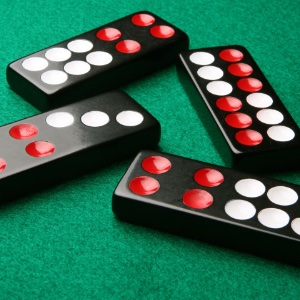
The earliest records of domino-like tiles appear in China during the Song Dynasty (circa 1120 AD), with the earliest mention found in Zhou Mi's text, Former Events in Wulin. These early tiles, called “p’ai” (牌), represented all 21 possible outcomes of two six-sided dice, with each tile divided into two squares (or halves): one half representing the result of one die, and the other half representing the second die, thus corresponding to the possible throws of two dice. Unlike modern dominoes, the Chinese ones divided tiles into ‘military’ and ‘civil’ suits, a concept known as two suits, and each double belongs to only one suit. Each had its own ranking, and the tiles were used in various games of skill, strategy, and chance. In Chinese dominoes, the identity of the tile is crucial, whereas in Western ones, matching pips is the key aspect of gameplay. Chinese dominoes have a total of 32 tiles, including duplicates of some throws, while European style dominoes (and most Western domino sets) typically have twenty eight tiles and do not include duplicates. A single domino or single tile can have blank faces in Western sets, but Chinese dominoes do not have blank faces. The structure of the double-six set (the most common Western set) includes twenty eight tiles, each representing a unique combination of two dice throws, including a tile with a single die and the other half blank.
Archaeological finds and ancient texts suggest that Chinese nobles and scholars played these games for small wagers, usually in tea houses or courtly gatherings. The domino pieces were often made of bone, ivory, ebony, or mother of pearl, symbolising wealth and luck, and the colors of the pips—black pips or white pips—evolved based on available materials and cultural preferences. This is where the English slang ‘bones’ for dominoes originates, a nod to the game’s earliest craftsmanship. Domino tiles have evolved with dominant cultures, using whatever materials were available, and some of the most expensive domino sets are made of gold and diamonds. Modern sets are usually made of synthetic materials such as ABS or polystyrene plastics, Bakelite, or other phenolic resins, but domino sets have also been made from stone, other woods, metals, ceramic clay, and even frosted glass or crystal.
Chinese dominoes were closely linked to gambling culture from the beginning. Players bet on tile combinations or challenged each other to form specific patterns, not unlike modern poker hands. The famous Chinese game Pai Gow (meaning ‘make nine’) was directly based on domino tiles and became one of the earliest formalised tile-based gambling systems. Over time, Pai Gow would inspire other gambling innovations, most notably, Pai Gow Poker, which appears in casinos worldwide today. The inheritance of domino games from Chinese ones to European style dominoes marks a significant chapter in dominoes history, with European dominoes traditionally made of bone, mother of pearl, ivory, or dark hardwood such as ebony, and Western dominoes being shorter than Chinese ones.
Dominoes Arrive in Europe: From Monks to Merchants
Dominoes reached Europe through trade routes connecting China, Persia, and the Italian states. Historians believe Venetian and Neapolitan merchants encountered the game around the 18th century, possibly brought back by missionaries or explorers returning from Asia. There is ongoing debate among historians about whether dominoes were invented independently in Europe or introduced by Italian missionaries who may have brought the game from China, although definitive evidence is lacking. Once in Italy, the tiles evolved, the Chinese suits disappeared, and the European version simplified gameplay to focus on matching numbers. This made the game more social, easier to learn, and perfect for friendly wagering.
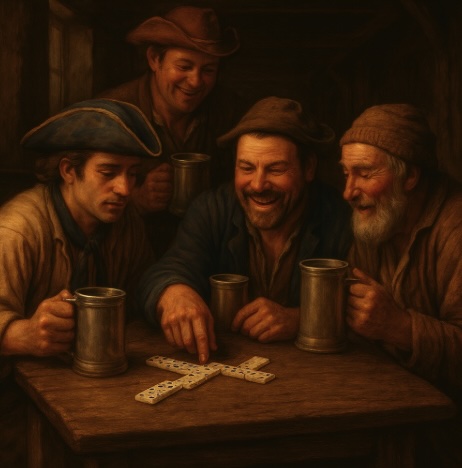
The name 'domino' likely derives from the resemblance of the black-and-white tiles to a black and white hood or hooded cape, specifically the white hood worn by Christian priests in winter. The term 'domino' is French for this type of cloak, and some theories also connect the name to a kind of carnival costume worn during the Venetian Carnival. Modern dominoes first appeared in France during the mid-18th century. In the taverns and parlours of 18th-century Italy and France, dominoes became a fashionable pastime. Aristocrats played for status, sailors played for drinks, and gamblers played for coin. The game achieved great popularity during the 18th and 19th centuries, especially in coffee houses, and has since become a popular pub game in many countries, retaining much of its popularity as a café game. The randomness of the draw, combined with the skill of tile placement, made dominoes one of the first European games to balance luck and logic, a formula that would define gambling for centuries to come.
The Caribbean and Latin American Legacy: A Social Gamble
When European empires expanded across the Atlantic, they brought dominoes with them. The game found fertile ground in the Caribbean, especially in Cuba, Puerto Rico, and the Dominican Republic. Here, dominoes became more than a pastime; they became a cultural ritual. Played on street corners, in cafés, and during family gatherings, dominoes evolved into a blend of friendly rivalry and informal gambling. Domino games are played all over the world, but they are most popular in Latin America.
In Cuban culture, dominoes are a popular form of social entertainment, with friends and family gathering to play the game together for hours on end. Players would often wager small amounts of money, drinks, or cigars, and the game’s tempo reflected the rhythm of island life: competitive but communal, serious but celebratory. Domino tables became stages for wit, psychology, and strategy. In these regions, popular forms of dominoes such as Domino Whist and Mexican Train are widely played, reflecting regional preferences and traditions. To play dominoes well was to command respect and sometimes win a little pocket change. Today, competitive domino tournaments still exist across Latin America, with cash prizes and even corporate sponsorships, proof that its gambling DNA remains alive.
Dominoes Game: Classic Block and Draw Games, Trick Taking and Scoring Variants, Remaining Dominoes, Players Play, Same Value, Composition Through the Ages, Dominoes and The Psychology of Gambling & From Tile Tables to Touchscreens
Domino games have come a long way from their ancient roots, evolving into a vibrant family of play styles that cater to every kind of player. Whether you’re drawn to the strategic depth of classic block games, the competitive edge of scoring variants, or the lively atmosphere of regional favourites, there’s a domino game for everyone. This diversity is a testament to the enduring appeal and adaptability of dominoes, a game that continues to unite players across generations and continents.
Classic Block and Draw Domino Games
At the heart of most domino games is Classic Dominoes, the most commonly played variant, built around the traditional block and draw formats that have stood the test of time as the foundation of the domino tradition. In these games, players take turns laying down tiles end to end, matching the numbers on their own tiles to the open ends on the table. The objective is simple: in blocking games, be the first to play all tiles, or block your opponents so they can't make a move. In a game with two players, each player draws 7 tiles from the set. In Draw Dominoes, players draw from the boneyard until a matching tile or other playable piece is found, which can then be laid. European dominoes, especially the iconic double six set, are the standard for these games, which have been enjoyed since the 18th century. The history of dominoes in Europe is closely tied to these classic formats, with records showing that tiles were played in parlours and coffee houses across the continent. The straightforward rules and quick pace make block and draw games a perfect introduction to the world of dominoes, while still offering plenty of room for strategy and skill. If the boneyard runs out and no player can move, the game ends in a block.
Trick Taking and Matching Tile Scoring Variants
For those seeking a more complex challenge, trick taking and scoring variants of domino games offer a fresh twist on traditional play. In these games, players compete to win tricks or accumulate points by forming specific patterns or combinations with their tiles. In Fives and Threes, players earn points scored by manipulating the totals of the exposed end tiles. Some systems reward players for winning the round, while others track scores across several rounds. Scoring games award scores according to each variant’s specific rules, and players earn points throughout the game rather than only at the end. Many formats use a target of 100 points, and the winning player is the first player reaches that mark. Scoring games like Mexican Train Dominoes have become especially popular, requiring players to carefully manage their domino sets and plan several moves ahead. Bergen is another example and scores for matching numbers at the open ends. These games often use larger sets, such as the double twelve, to accommodate more players and intricate strategies. The influence of European game traditions, particularly trick-taking games with playing cards, is evident in the way these domino games are structured. Whether you're aiming to outscore your rivals or master the art of the perfect trick, these variants add a layer of excitement and depth to the classic domino experience, and some formats also award points when a player finishes with the lowest number of dots or pips than opponents.
Regional Favourites: Cuban, Mexican Train, and Beyond
As dominoes spread around the world, they picked up local flavours and unique rules, resulting in a rich tapestry of regional favorites. Cuban dominoes, for example, are known for their fast-paced, social gameplay, often played in lively gatherings with friends and family. Mexican Train Dominoes has become a global sensation, blending traditional rules with new twists that keep players on their toes. Western dominoes, typically played with the double six set, remain a staple in many countries, while Chinese dominoes continue to influence play styles in Asia and beyond. The global journey of dominoes, from China to Europe, and across Latin America, has given rise to countless variations, each reflecting the culture and spirit of its players. Whether you’re playing in a London pub, a Havana street corner, or an online tournament, the game of dominoes offers endless possibilities for fun, strategy, and connection.
In the end, the many faces of dominoes showcase the game’s remarkable ability to adapt and thrive in any setting. From classic block and draw games to inventive scoring variants and beloved regional styles, dominoes remain a timeless pastime that brings people together. So why not explore a new domino game today? With its rich history, diverse play styles, and global reach, dominoes promise entertainment and challenge for generations to come.
From Bone to Bakelite: Materials and Craftsmanship
The story of domino tiles is as much about craftsmanship as it is about gameplay. In ancient China, the earliest dominoes were meticulously carved from bone, ivory, and wood, with artisans inking black pips and white pips onto each piece to distinguish values. These Chinese dominoes were prized possessions, often reserved for the elite, and their tactile weight and smooth finish made every game feel like a ritual. As domino games journeyed westward, European dominoes adopted new materials, bone paired with dark hardwoods like ebony, or even mother of pearl inlays, creating a striking contrast that made the pips stand out. The classic double six set, featuring twenty eight tiles with a mix of numbered pips and blank faces, became the standard for most domino games in Europe.
With the spread of dominoes across continents, innovation in materials followed. The 20th century saw the introduction of Bakelite, one of the first plastics, which revolutionised the production of domino sets. Suddenly, dominoes were no longer exclusive to the wealthy; modern sets made from plastic and resin brought the game to coffee tables and pubs around the world. Today, whether you’re handling a vintage bone set or a sleek plastic double six, each tile carries a piece of history proof that the evolution of dominoes is as much about what they’re made of as how they’re played.
The Evolution of Domino Design
Just as the materials have changed, so too has the look and feel of domino pieces. European style dominoes are instantly recognisable for their clean, black and white design, simple, elegant, and easy to read at a glance. In contrast, Chinese dominoes often feature more elaborate markings, with six pips on each tile and intricate patterns that reflect centuries of tradition. As dominoes spread to new regions, Western games like Mexican Train Dominoes introduced vibrant coloured pips and unique tile shapes, adding a fresh twist to the classic format. In some games, a double laid as the first tile acts as a spinner, allowing moves from all four sides.
Modern domino sets now come in a dazzling array of styles, from traditional bone and ivory to contemporary plastic and even metal. Whether you're playing scoring games that reward strategic placement or blocking games that challenge you to outwit your opponents, the design of the tiles adds to the experience. The enduring popularity of dominoes, across cultures, generations, and continents, owes much to this blend of tradition and innovation. Each set, whether ornate or minimalist, tells a story of how dominoes have been played, adapted, and cherished throughout history.
Dominoes and the Psychology of Gambling
Dominoes thrive on the same tension that defines gambling itself: uncertainty mixed with control. Players must make strategic decisions based on limited information, anticipating opponents' moves while managing risk and reward, and strong players often use high-number tiles early to limit opponents' scoring chances. This balance between skill and chance mirrors other gambling formats, from poker to blackjack, and helps explain why dominoes became a natural fit for betting. The satisfaction of predicting the right tile or blocking an opponent mimics the emotional highs of a successful wager.
The stakes may be small in social settings, but the psychology is identical to larger casino play: confidence, bluffing, memory, and timing. Dominoes, therefore, serve as an accessible entry point into the mindset of gambling, where every move carries a mix of luck and calculation, and players who take note of opponents' moves can often identify which numbers they likely do not have.
From Tile Tables to Touchscreens: Domino Gambling in the Digital Age
In the late 20th and early 21st centuries, the digital revolution brought dominoes full circle. Online gaming platforms began offering virtual domino tables, both free-to-play and wager-based. Some casino software developers even experimented with hybrid versions that combine domino scoring with poker-style betting. The most famous evolution remains “Pai Gow Poker”, a modern casino game created in 1985 by California card room owner Sam Torosian. He adapted the traditional Chinese domino game Pai Gow into a poker format, using a 52-card deck plus one joker instead of tiles. It became a Las Vegas staple, linking ancient gambling traditions and modern casino innovation.
Today, online gambling platforms feature digital domino games with competitive leader boards and prize pools. Online domino apps offer real-money play under regulated frameworks in countries like Brazil, Spain, and the Philippines. These platforms also allow players to play individually, either against computer opponents or online rivals, providing flexibility beyond traditional multiplayer formats. These digital adaptations show that the game’s appeal, simple, strategic, and suspenseful, translates perfectly into the mobile era.
Dominoes is now played internationally and has become a popular pub game in many countries.

Dominoes Game: More Than A Game, Block Dominoes, Two Ends, New Game, Double Six Tile, Highest Double, Square End, One End, Fun Facts About Dominoes and Gambling, Legacy and Influence
More Than a Game: Dominoes as Cultural Symbol
Beyond gambling, dominoes have taken on deep cultural meanings. In the Caribbean, a domino table symbolises community and tradition; in Chinese culture, the tiles carry historical associations with fate and fortune. Artists, filmmakers, and writers have long used domino imagery to explore themes of luck, consequence, and interconnectedness, each tile representing a decision, each fall a chain reaction. A single domino can serve as a powerful symbol in art, literature, or metaphor, representing the individual impact or the start of a chain reaction. Even in modern metaphors like ‘the domino effect,’ the tiles embody the concept of one small move setting significant events in motion.
From street tournaments in Havana to luxury casinos in Macau, dominoes remind us that games of chance can connect people across cultures and centuries. They are relics of gambling’s ancient past and living symbols of its ongoing allure.
Fun Facts About Dominoes and Gambling
· The word ‘domino’ likely derives from the Latin “dominus”, meaning ‘lord,’ or from French priests’ black-and-white hooded robes, mirroring the tiles’ colours.
· In 18th-century France, dominoes were used as a discreet way to gamble during anti-gaming crackdowns.
· Larger domino sets can have up to 190 tiles.
· Players may play on their own or a shared train in the Mexican Train variant.
· Double tiles allow moves off all four sides when laid as the first move.
· The oldest written mention of domino tiles dates to the 13th century.
· The name 'domino' was first recorded in 1762.
· Dominoes spread to England by the late 1700s.
· ’Knocking the table’, a common gesture in dominoes, originated as a gambling signal to pass a bet or fold a hand.
· The largest recorded public domino tournament occurred in Havana in 2003, with over 1,500 players.
· Pai Gow remains the oldest continuously played gambling game using domino tiles, predating poker by several centuries.
· Dominoes have sometimes been used for divination, such as bone throwing in Chinese culture and in the African diaspora.
· The practice of domino toppling gained popularity in the mid-1970s, evolving dominoes into a spectator sport.
· Unusual domino sets, such as giant dominoes, can be found at specialty game shops.
· Domino sets are available for purchase at various game shops and online retailers.
· Various modern versions of domino games include Block and Draw, All Fives (Muggins), and Mexican Train.
· The most popular type of play in dominoes are layout games, which fall into two main categories: blocking games and scoring games.
· In blocking games, players aim to play their last tile before the game ends, while in scoring games, players can potentially add to the score throughout the game.
· The game of dominoes typically starts with players drawing tiles from a stock or boneyard, and players take turns playing tiles that match the values on the ends of the line of play.
· In many domino games, doubles can serve as spinners, allowing them to be played on all four sides, which can cause the line of play to branch.
· Players score points in scoring games by creating configurations where the total pip count of the open ends is a multiple of a certain number, such as five in the game of Fives.
· The game ends when a player has no tiles left or when the game is blocked, with the winner determined by the points left in the opposing players' hands.
· In the most common variant of dominoes, players draw seven tiles each from a double-six set, which consists of 28 tiles.
· In some versions of domino games, players are allowed to draw as many tiles as desired from the stock before playing a tile, especially in draw games.
· Larger domino sets, such as double-twelve (91 tiles) and double-fifteen (136 tiles), are popular for games involving several players.
· The most common domino sets commercially available are double six (with 28 tiles) and double nine (with 55 tiles).
· Modern commercial domino sets are usually made of synthetic materials, such as ABS or polystyrene plastics.
· Domino sets can be made from various materials, including bone, ivory, wood, and synthetic materials like plastic.
· Draw game is a popular variant where players draw tiles from the stock before playing.
· Trick taking games played with dominoes, such as the game of 42 in Texas, are adaptations of card games.
· In some games, each trick or completed hand may be worth one point.
· The last tile played by a player can end the game, either by winning or causing a block.
· Game ends when a player has no tiles left or when the game is blocked.
· Tile starts refers to the initial tile played to begin the game, often a double or a specific tile.
· Player draws describes the process of drawing tiles from the stock or boneyard when unable to play.
· There are many variations of domino games across different regions and cultures.
· Domino sets represent all possible throws of two dice, with each tile corresponding to a unique combination.
· Each domino tile is divided into two squares, with one half and the other half representing different values.
· Double belongs refers to how doubles are classified within the set, either as part of a suit or as a separate suit.
· Domino tiles are historically connected to dice, with one die and second die outcomes represented on each half.
· Dominoes are similar to playing cards in gameplay and organisation, often serving as alternatives to card games.
· Scoring games are a main category of domino play, where players accumulate points throughout the game.
Legacy and Influence: Why Dominoes Endure
Dominoes have outlasted empires, revolutions, and technologies. Their endurance lies in accessibility, a game that anyone can learn in minutes yet master over years. They combine human psychology, tactile satisfaction, and the eternal thrill of uncertainty. Dominoes have played a significant role in society for centuries, providing entertainment, socialisation, and intellectual stimulation for people of all ages. Whether used for betting in Macau, friendly play in London pubs, or online competitions, dominoes have evolved in such a way that they retain a timeless appeal that few other games achieve.
In many ways, dominoes tell the story of gambling, born from curiosity, refined by culture, and sustained by community. They show that while the methods may change, from carved ivory to casino chips to smartphone screens, the instinct to take a chance never does.
www.casinojester.co.uk

Overview
From ancient Chinese bone tiles to modern casino card tables, dominoes have rolled through history as symbols of luck, logic, and human connection. They bridge the worlds of tradition and technology, strategy and chance. Today, the same principles that guided Song Dynasty gamblers echo in digital domino apps and hybrid casino games. Dominoes remind us that the love of the game, and the thrill of possibility, are truly timeless.
Feeling inspired by gambling’s oldest traditions? Discover top-rated UK-licensed online casinos where history meets innovation. Play responsibly, explore live dealer games, and claim your welcome bonus today.
www.casinojester.co.uk
CJ Guides and Reviews
CJ Pai Gow Guide
Beginner’s Guide To Pai Gow
10 Tips To Play Better Pai Gow
CJ Casino Guide
The History of Casinos
Casino Architecture
Top 10 Best Gambling History Books
The History And Evolution Of Casino Chips
The History and Evolution of Casino Playing Cards
CJ Slots Guide
The Interesting History Of Slot Machines
Top 10 Books About Casino Slots
CJ Baccarat Guide
The Luxurious History Of Baccarat
CJ Blackjack Guide
The Glamorous History Of Blackjack
CJ Craps Guide
The Eventful History Of Craps
CJ Poker Guide
The Crazy History Of Poker
CJ Casino Review
Betway Casino Review and Current Offers
Genting Casino Review and Current Offers
Hippodrome Casino Review and Current Offers
William Hill Casino Review and Current Offers
CJ Roulette Guide
The Aristocratic History Of Roulette
CJ Bingo Guide
The History And Evolution Of Bingo
CJ Bingo Guide
The History and Evolution of Keno
CJ Travel Guide
Top 10 Best Books About Macau
CJ Guides
Guides and Reviews Index
SEPTEMBER 2026
Top Features of UK Online Casinos
Playing at our recommended casinos offers an exciting and secure gaming experience. Enjoy generous online casino bonuses, a wide variety of gaming options, and robust security measures.

UK Regulated, secure & trusted

Huge variety of games, jackpots, free spins & bonuses

All casinos offer Responsible gambling tools

Fast, safe & simple deposits & withdrawals

Good Customer Service

Clear & simple design to ease usability
Trusted by top brands in the industry